
Make healthy homemade cooked cat food very easily with my full guide and complete and balanced chicken recipe.
Most “vet-approved” free recipes online are not complete and balanced. This can cause dangerous nutritional deficiencies in the long run.
Additionally, lots of these free recipes online include rice, sweet potatoes, peas, and other non-carnivore ingredients.
Our cats need fresh meat to not only survive but thrive!
But a fresh homemade diet is made with real meat-based ingredients that nourish our cats from the inside out!
Overweight cats lose weight naturally, senior cats get their energy back, behavior and litter box issues improve, and our bond gets stronger with our best friend.
This is exactly why I recommend homemade cat food as a pet nutritionist.
Disclaimer: I earn a commission if you purchase through affiliate links below. No additional cost to you.
Homemade cooked chicken cat food recipe
This cooked chicken cat food recipe is complete and balanced for adult cats. I use whole foods and minimal supplements to complete the recipe.
You can get most ingredients at the grocery store. And you’ll have to buy a few things online. But it’s very simple!
This cooked chicken cat food recipe is:
- High protein, low carb
- Chicken-based with whole foods
- Free from grains, gluten, and synthetic supplements
- Made with simple ingredients so you don’t need a grinder
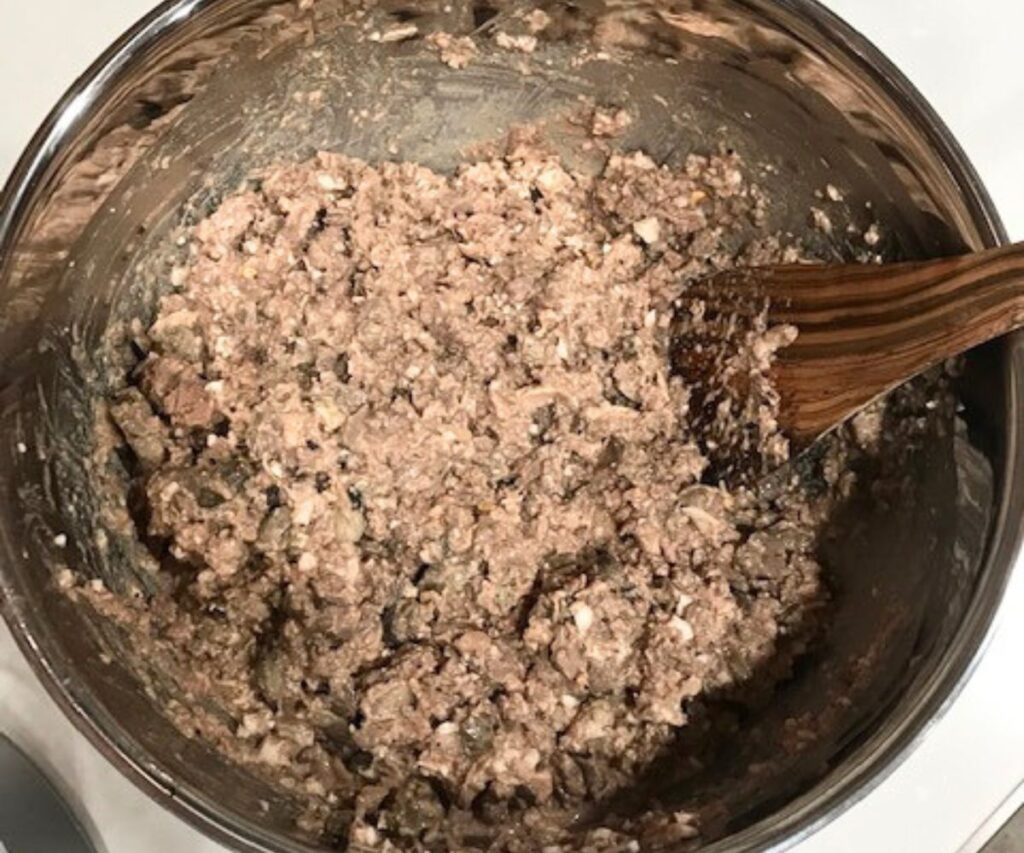
Cooked chicken cat food recipe:
This recipe is formulated to be complete and balanced to AAFCO guidelines for healthy adult cats. Chicken is the main ingredient, with a few other protein sources to make this a complete and balanced meal.
I’ve included product links within the ingredients list below of what I use and recommend.
- 14 oz (397 g) chicken thigh meat
- 3.5 oz (99 g) chicken heart
- 2 oz (57 g) chicken liver
- 1.5 oz (43 g) sardines (canned in water, no salt)
- 1.5 oz (43 g) cooked frozen oysters (I buy these at a local Asian Market)
- 1 oz (28 g) cooked blue mussels (I buy these at Lidl in the frozen seafood section)
- 2 hard-boiled eggs
- 2-1/2 T (17 g) raw sunflower seeds, no salt
- 1-1/2 tsp (5 g) eggshell powder
- 1-3/4 tsp nutritional yeast
- 500 mg taurine powder
- 1/2 scoop NOW kelp powder (comes with scoop)
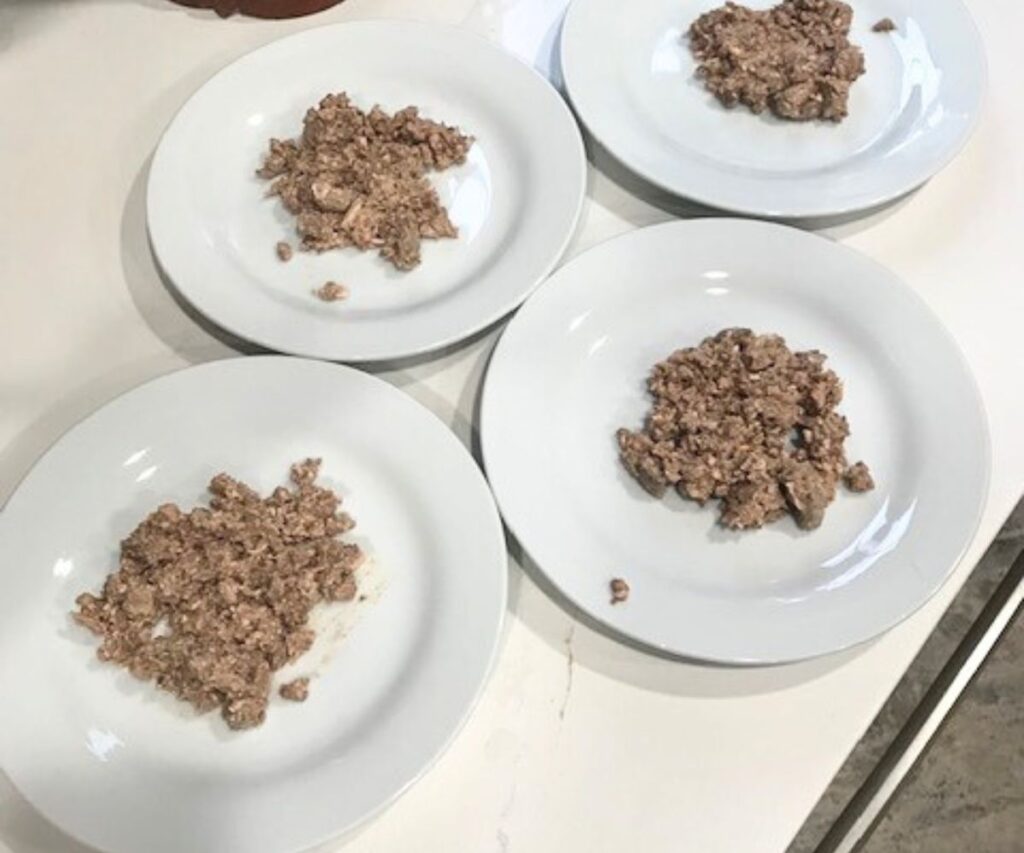
Where to buy meat ingredients
Check your grocery store, Asian market, farmers market, go directly to the farm, butcher, etc. Anywhere you can buy meat!
You can order meat ingredients online if you can’t find them locally. My go-to raw pet food supplier is Hare Today. They sell a variety of proteins, heart, gizzards, liver, kidney, etc.
Or you can order from farms that sell meat for human consumption. Stock up for yourself and your cat!
Nutritional benefits of this cat food recipe
Every ingredient in this recipe has a purpose.
My goal is to make recipes as simple as possible using whole food ingredients that offer high-quality nutrition.
- Chicken meat is high in protein, provides fat, and helps fulfill important vitamin and mineral requirements
- Hearts are high in taurine and other essential nutrients
- Liver helps to fulfill essential vitamins and minerals
- Blue mussels fulfill manganese requirements
- Sardines are rich in healthy fats and vitamin D
- Oysters provide necessary zinc, copper, and iron
- Sunflower seeds fulfill vitamin E requirements
- Eggshell powder brings calcium up so that the calcium-to-phosphorus ratio is what’s recommended
- Nutritional yeast provides potassium and B vitamins
- Taurine powder is added because this is a cooked recipe
- Kelp provides necessary iodine
Guaranteed analysis of this recipe
| Nutrient | As fed | Dry matter |
|---|---|---|
| Protein | 22.61% | 65.13% |
| Fat | 9.28% | 26.72% |
| Ash | 1.69% | 4.88% |
| Moisture | 65.28% | |
| Carbs | 1.13% | 3.26% |
| Ca:P | 1.1:1 |
Note: Ash = minerals. Carbs come from chicken liver and sunflower seeds. The carb amount should be less than 10% on a dry matter basis. So this recipe still meets that requirement.
Nutritional analysis of this recipe
Note: chloride, choline, and biotin appear low because the USDA food database does not report data for these nutrients.
Vitamin K is low; however, it is not necessary in the diet because cats can synthesize vitamin K on their own as long as the diet is not fish-heavy. This recipe is not fish-heavy.
| Nutrient | Recipe per day | Daily requirements |
|---|---|---|
| Calories (kcal) | 210.05 | 186.49 |
| Water Content (g) | 75.02 | N/A |
| Protein (g) | 25.99 | 12.12 |
| Arginine (g) | 1.61 | 0.48 |
| Histidine (g) | 0.63 | 0.15 |
| Isoleucine (g) | 1.09 | 0.24 |
| Methionine (g) | 0.60 | 0.09 |
| Methionine + Cystine (g) | 0.92 | 0.19 |
| Leucine (g) | 1.90 | 0.58 |
| Lysine (g) | 1.93 | 0.39 |
| Phenylalanine (g) | 0.98 | 0.20 |
| Phenylalanine + Tyrosine (g) | 1.82 | 0.71 |
| Threonine (g) | 1.04 | 0.34 |
| Tryptophan (g) | 0.25 | 0.07 |
| Valine (g) | 1.19 | 0.29 |
| Taurine (g) | 0.12 | 0.05 |
| Fat (g) | 10.66 | 4.20 |
| LA Linoleic Acid (g) | 1.82 | 0.26 |
| ALA α-Linolenic Acid (g) | 0.06 | 0.00 |
| AA Arachidonic Acid (g) | 0.225 | 0.009 |
| EPA + DHA (g) | 0.22 | N/A |
| Calcium (g) | 0.29 | 0.28 |
| Phosphorus (g) | 0.27 | 0.23 |
| Magnesium (mg) | 37.20 | 18.65 |
| Sodium (mg) | 130.03 | 93.24 |
| Potassium (g) | 0.29 | 0.28 |
| Chloride (mg) | 0.00 | 139.87 |
| Iron (mg) | 4.28 | 3.73 |
| Copper (mg) | 0.37 | 0.23 |
| Zinc (mg) | 4.92 | 3.51 |
| Manganese (mg) | 0.46 | 0.35 |
| Selenium (μg) | 46.07 | 13.99 |
| Iodine (μg) | 44.35 | 27.97 |
| Vitamin A (IU) | 1221.93 | 155.34 |
| Vitamin D (IU) | 32.55 | 13.05 |
| Vitamin E (α-tocopherol) (mg) | 1.31 | 1.25 |
| Vitamin K (Menadione) (mg) | 0.000 | 0.00 |
| Vitamin B1 Thiamin (mg) | 0.65 | 0.26 |
| Vitamin B2 Riboflavin (mg) | 1.02 | 0.19 |
| Vitamin B6 Pyridoxine (mg) | 0.42 | 0.19 |
| Vitamin B3 Niacin (mg) | 8.27 | 2.80 |
| Vitamin B5 Pantothenic Acid (mg) | 1.94 | 0.27 |
| Vitamin B12 Cobalamin (μg) | 7.33 | 0.93 |
| Vitamin B9 Folic Acid (μg) | 141.65 | 37.30 |
| Vitamin B7 Biotin (μg) | 0.00 | 3.36 |
| Choline (mg) | 115.25 | 111.89 |
| Carbohydrates (g) | 1.95 | N/A |
| Fiber (g) | 0.39 | N/A |
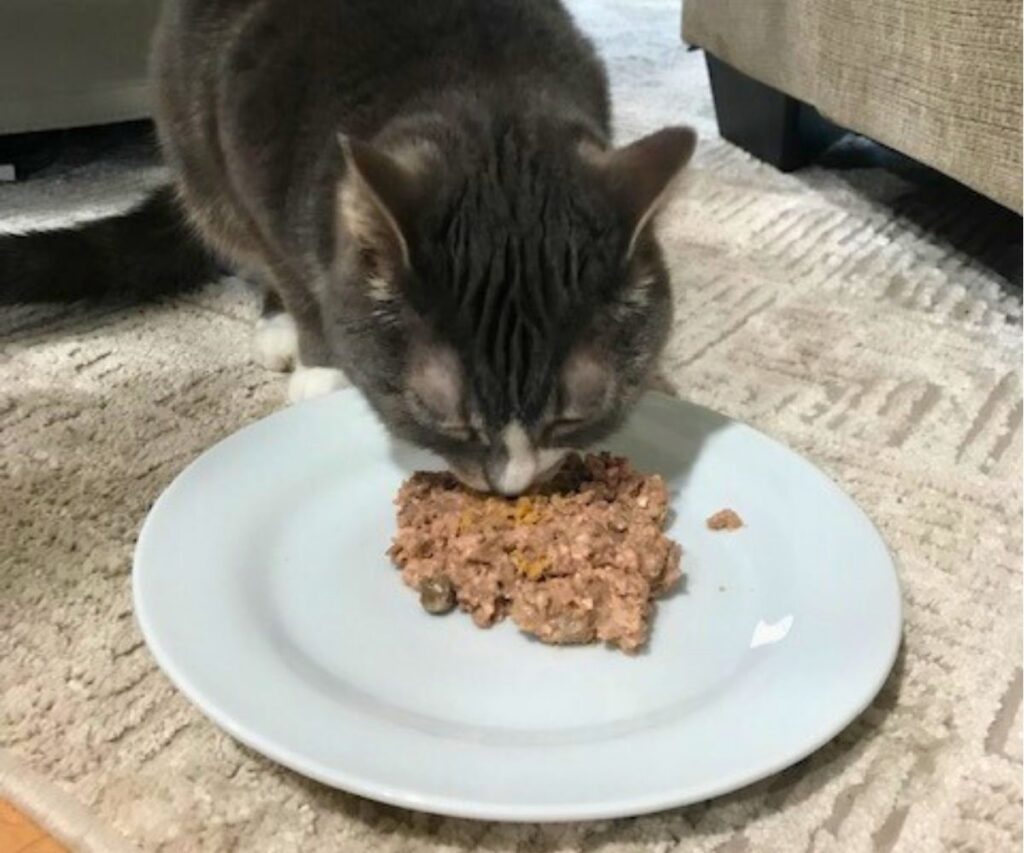
How to make cooked cat food
- All meat in this recipe should be served lightly cooked. Practice proper food safety and hygiene while preparing foods.
- Wash your hands, utensils, dishes, and surface areas with hot water and soap.
- Weigh ingredients using a digital scale based on the recipe above. You will need slightly more weight on the chicken thighs since you’ll remove the bones. Chicken thigh weight is based on after they are cooked and bones are removed.
- Cook all ingredients together for easy meal prep. Instant pot cook for 15 minutes with a manual release. Slow cooker cook on low for 5 hours or on high for 1 hour. Stovetop cook on medium heat with 1/4-1/2 cup of water for 20-30 minutes. These times are approximate. Use a food thermometer to confirm the chicken is cooked to 165° F.
- Let the ingredients cool completely. Remove bones from the thighs. Cut up larger chunks of meat into smaller pieces.
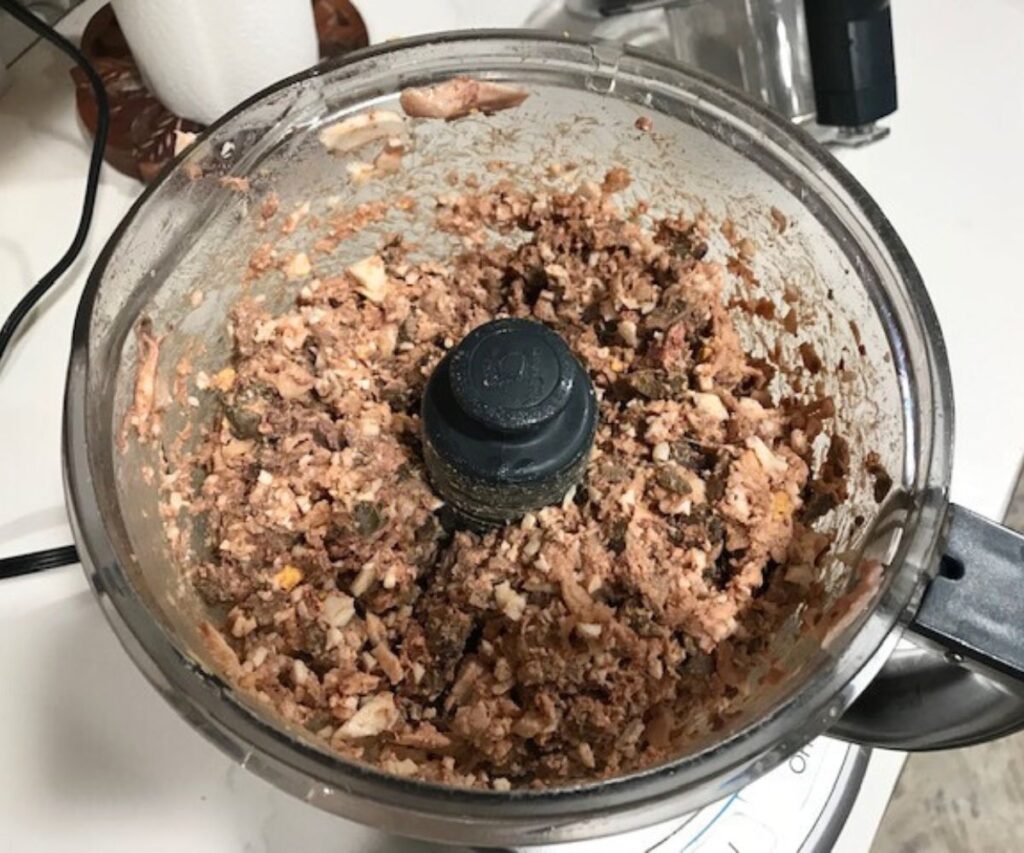
- Use a food processor or blender to mix all ingredients together. You can do this before or after you cook the meat.
- Preportion servings in sealed containers. You can use freezer-safe zip bags or any other food containers. Store any portions you will not use within 72 hours in freezer-safe containers and put in the freezer until you need it.
- Thaw food in the refrigerator ~24 hours before you need it. If you need to thaw food quickly, put the sealed container of food in a larger dish full of cold water. Do not thaw food at room temperature on the counter. Do not use a microwave.
- Serve all juices in the container when you feed.
Check out my meal prep list on Amazon for other supplies.
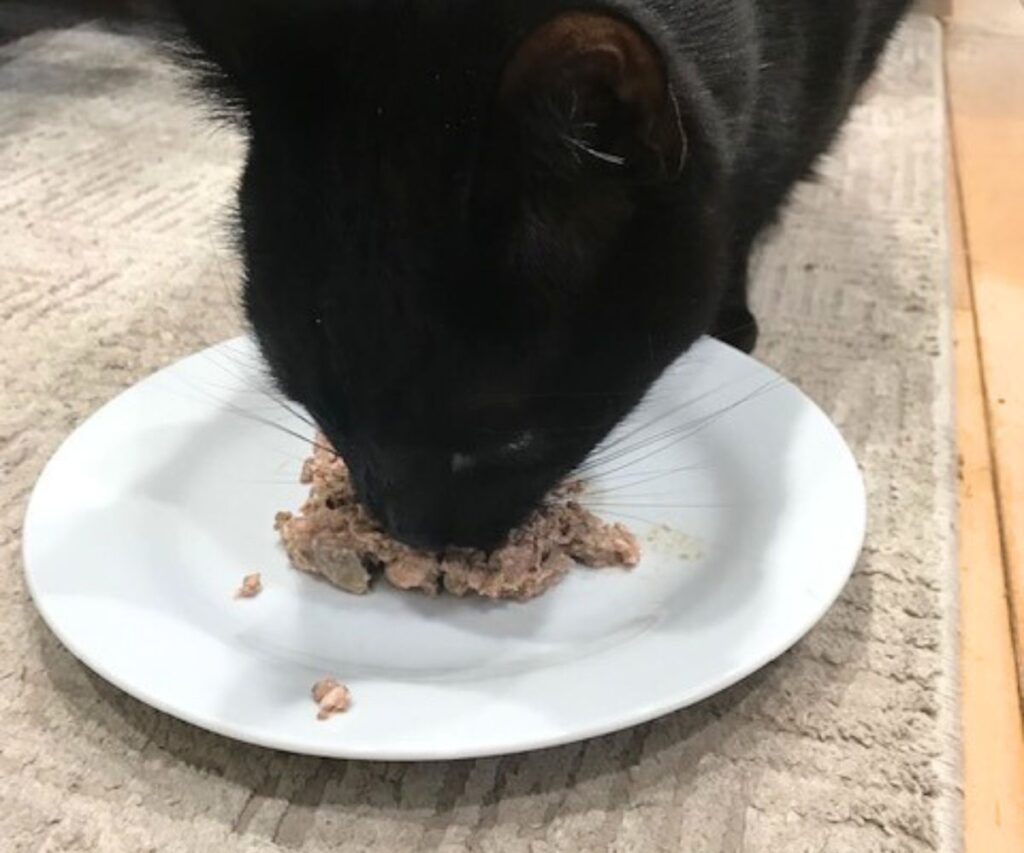
Please note that cats are very cautious (not picky!) about new foods. Make a plan to transition to any new food slowly. Use my switch your cat’s food plan.
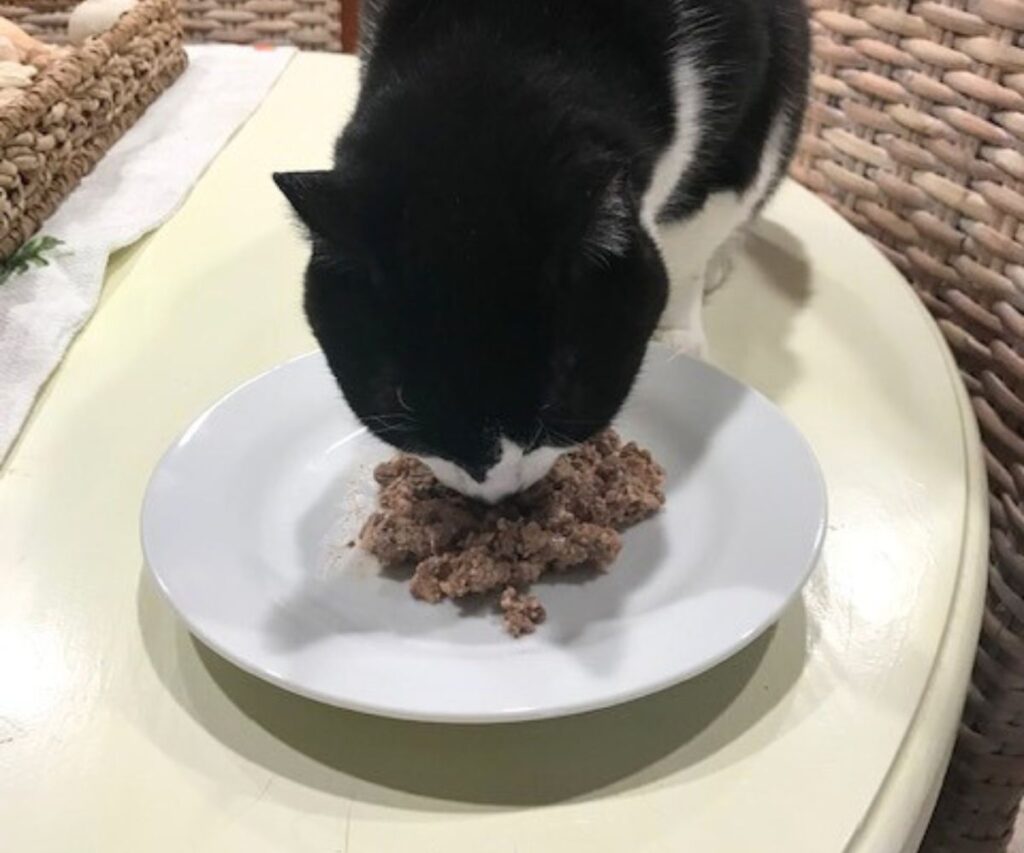
How much to feed your cat
This recipe is formulated to feed a 10-pound altered adult cat for 7 days. Feeding amounts vary depending on the individual cat.
Please adjust the feeding amount according to your cat’s weight, body condition score, and individual needs. General guidelines for this recipe are to feed 4 ounces daily per 10 pounds of weight.
Macronutrient information for this recipe
| kcal / oz | 52 |
| kcal / day | 210.05 |
| kcal / kg | 1834 |
| Amount to feed per day (oz) | 4 |
| Amount to feed per day (g) | 114 |
You will have to adjust feeding amounts based on your individual cat. See how much to feed your cat for more instructions.
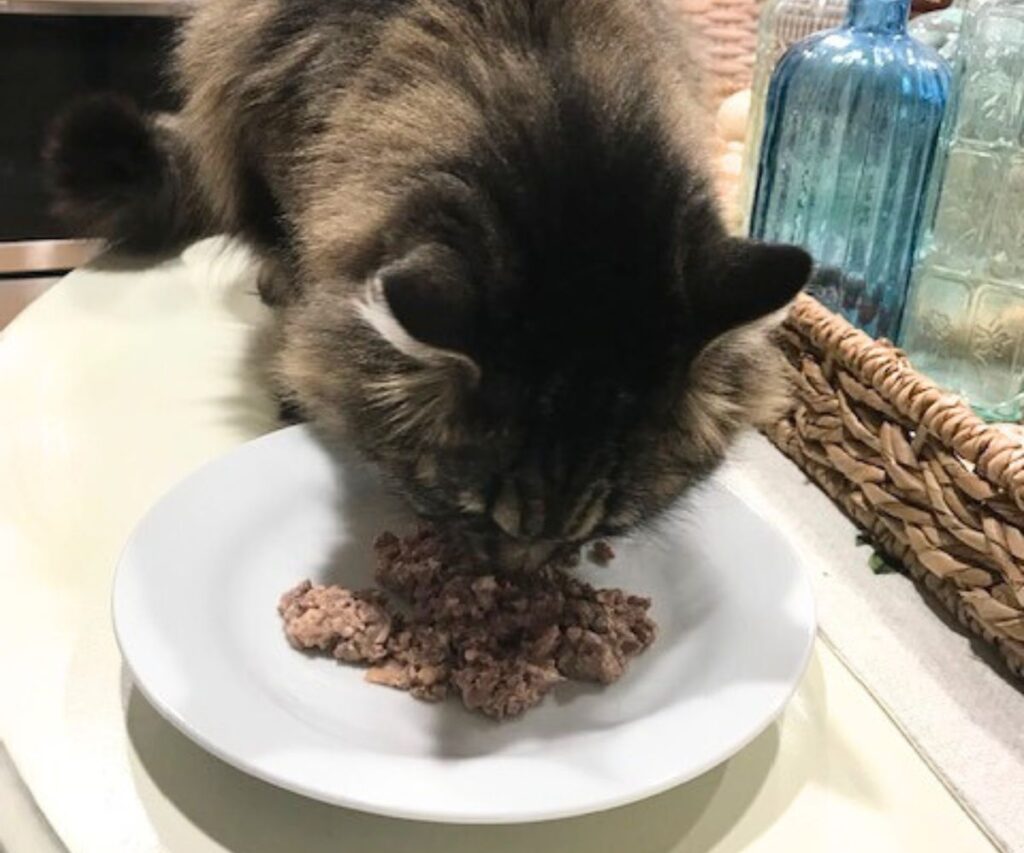
More cat food recipes
I have a library of cat food recipes here on this blog:
- Easy homemade salmon cat treats
- Simple homemade beef cat treats
- Healthy skin & coat topper recipe
- Cooked chicken cat food recipes
- Cooked beef cat food recipe
- Recipes using Hare Today grinds
- Raw boneless chicken recipe
- Raw boneless beef recipe
- Ground mouse recipe
- Alnutrin for meat & bone recipes
- All cat food recipes
How to make your own recipes
For beginners who want to make their own recipes, I highly recommend Paws of Prey Cat Meal Formulator. It’s very easy to use, includes a sample recipe, and it’s a one-time payment! Check out how to make your own cat food recipe to see how I formulate with this formulator.
Still need help? Check out how to make homemade raw cat food and recipe FAQ for a more detailed guide.
Note: This recipe is a general guideline for educational purposes only and should not replace professional advice. It is the cat parent’s responsibility to determine if this recipe is suitable for their individual cat. Cat parents must also discuss any diet changes with their cat’s veterinarian. This recipe was formulated to AAFCO guidelines for adult cats.
Save the pin below to your cat food recipes board on Pinterest!
