
A whole prey diet for cats means that you feed the entire prey whole. Prey like mice, day-old chicks, and quail are perfect prey for cats.
We feed frozen feeders that are raised and sold for pet consumption. Feeders are euthanized with CO2 gas according to AVMA guidelines and then shipped to you frozen. We do not feed live prey because that’s dangerous for everyone.
Jericho’s been eating whole prey for many years. He’s had experience with multiple types of whole prey.
I absolutely love feeding whole prey! The benefits of feeding whole prey are great. And Jericho eats whole prey alongside a homemade raw diet so he has lots of variety.
It can be difficult to balance a 100% whole prey diet for cats since nutritional data is lacking for whole prey. However, we can feed whole prey along with other whole foods to mimic our cat’s natural diet.
Disclaimer: I earn a commission if you purchase through the affiliate links below. No additional cost to you.
What type of whole prey can cats eat?
Feral cats around the world eat a variety of whole prey like mice, rats, voles, rabbits, small birds, and a few other prey sources.
Cambridge University Press published a study in 2011 on the diet of feral free-roaming cats. There were 27 studies total, where over 6,000 samples were collected from cats around the world. These are the same cats we have (not wild cats), except they live outdoors and do not rely on humans.
Based on this study, we know that our cats eat whole prey in nature. So we can feed the same prey indoors!
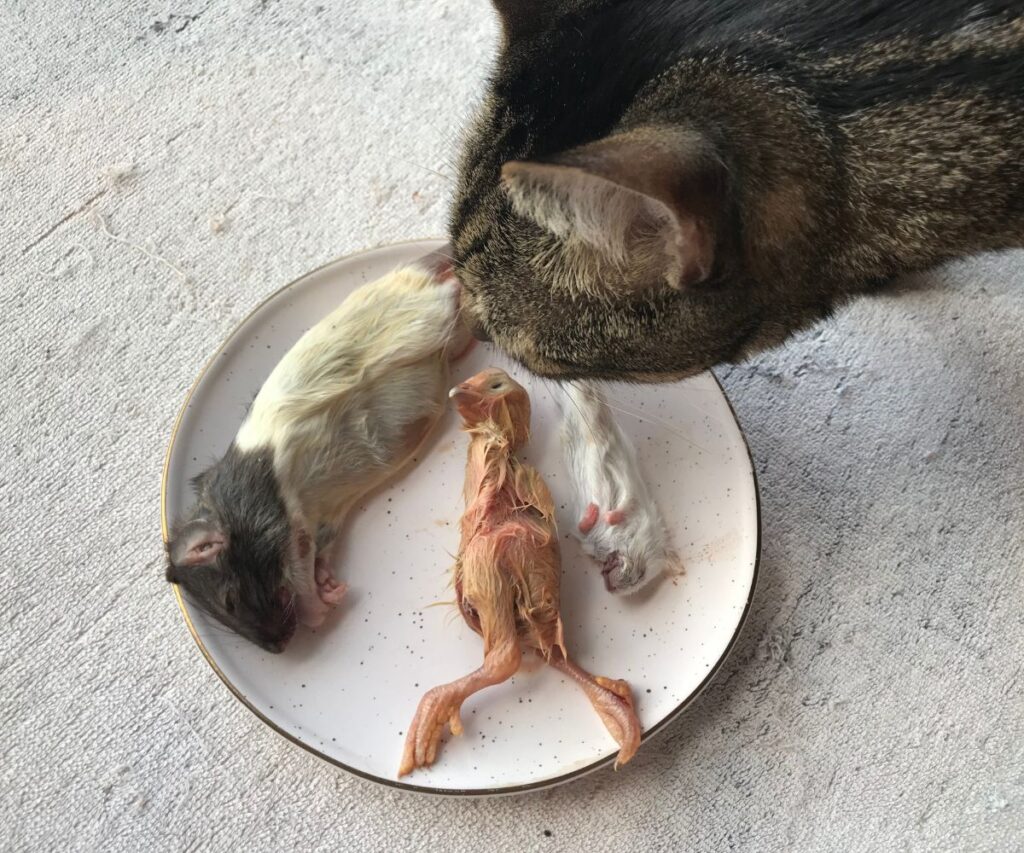
Types of whole prey cats can eat:
- Mice
- Rats (pup or small)
- Hamsters (small)
- Gerbils
- Day-old chicks
- Quail
- Pinkie rabbits
I have experience feeding Jericho most of these prey. Jericho has had mice (all sizes), rats (pup, small, and medium), hamsters (small and medium), day-old chicks (his favorite), and quail (extra-small, small, and adult). He eats rabbit, but it’s ground.
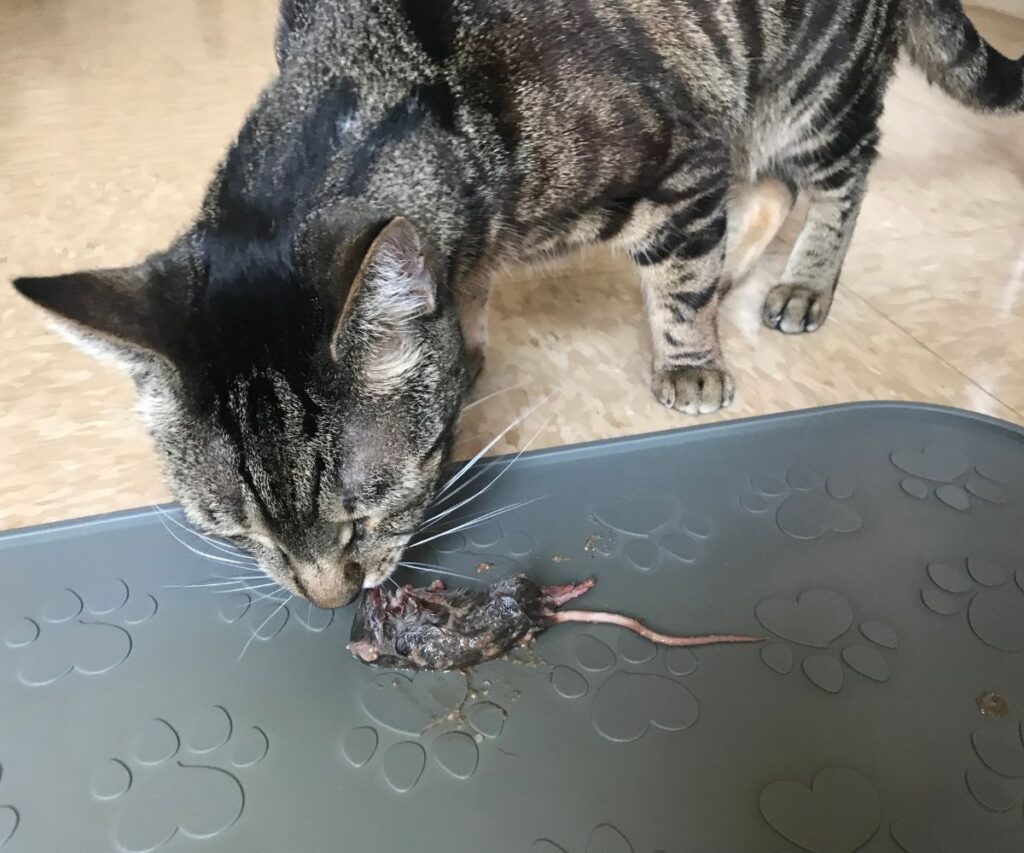
Mice
Cats can eat any size whole prey mouse. The jumbo mice are usually a little more than an ounce. The most common size you will see are large mice which are a bit smaller than 1 ounce. 0.8 ounces is the average for large mice.
Rats
Rats are much larger so you’ll have to feed a younger rat unless you cut them up into smaller pieces. The African soft-furred rats are a bit smaller than the regular rats. But you’ll still want to feed a younger ASF if you don’t want to cut them up.
Hamsters
Small hamsters are better to give than medium. The medium ones may have to be cut in half. I think the medium size was around 2 ounces total, and small were around 1 ounce or a little more. Serving a medium hamster could be one meal though if your cat eats 4 ounces daily.
Gerbils
I don’t have experience feeding gerbils, but these are smaller animals compared to rats. Gerbils are rodents so these fit the cat’s natural diet well.
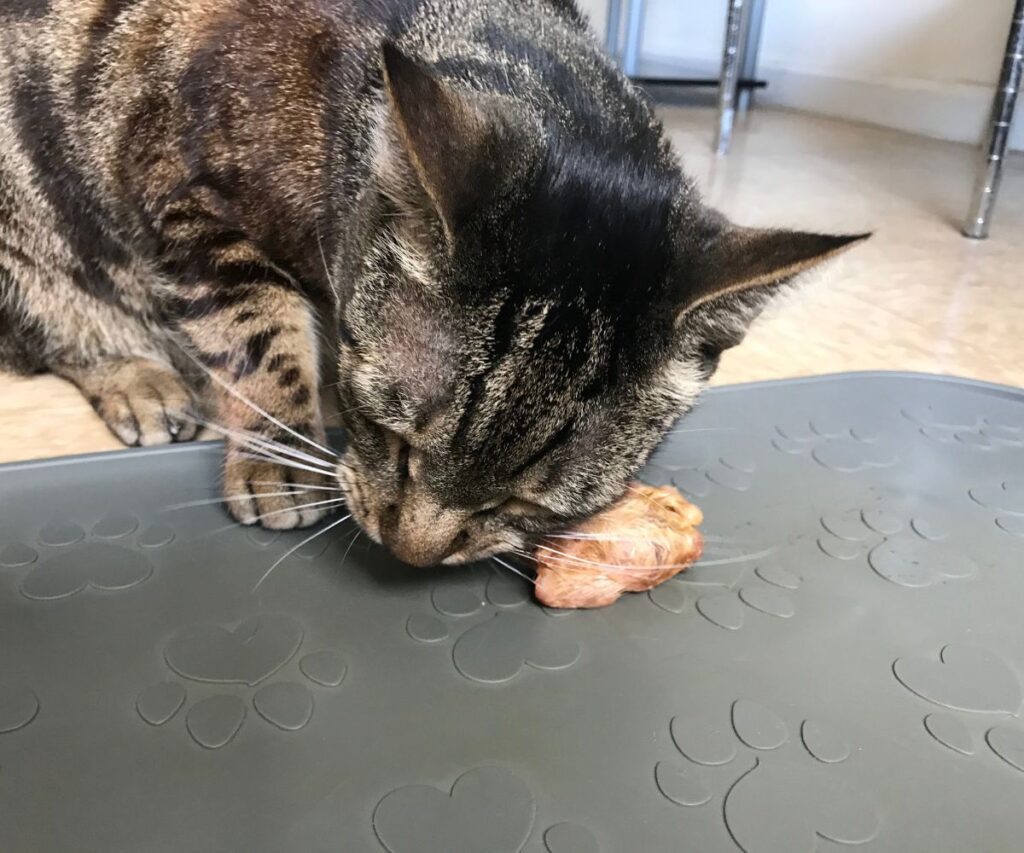
Day-old chicks
Jericho’s favorites are day-old chicks. These are the perfect size for cats – a little over 1 ounce of food. I’ve found the average is 1.3 ounces per chick. These are 1-3 day-old chickens.
Quail
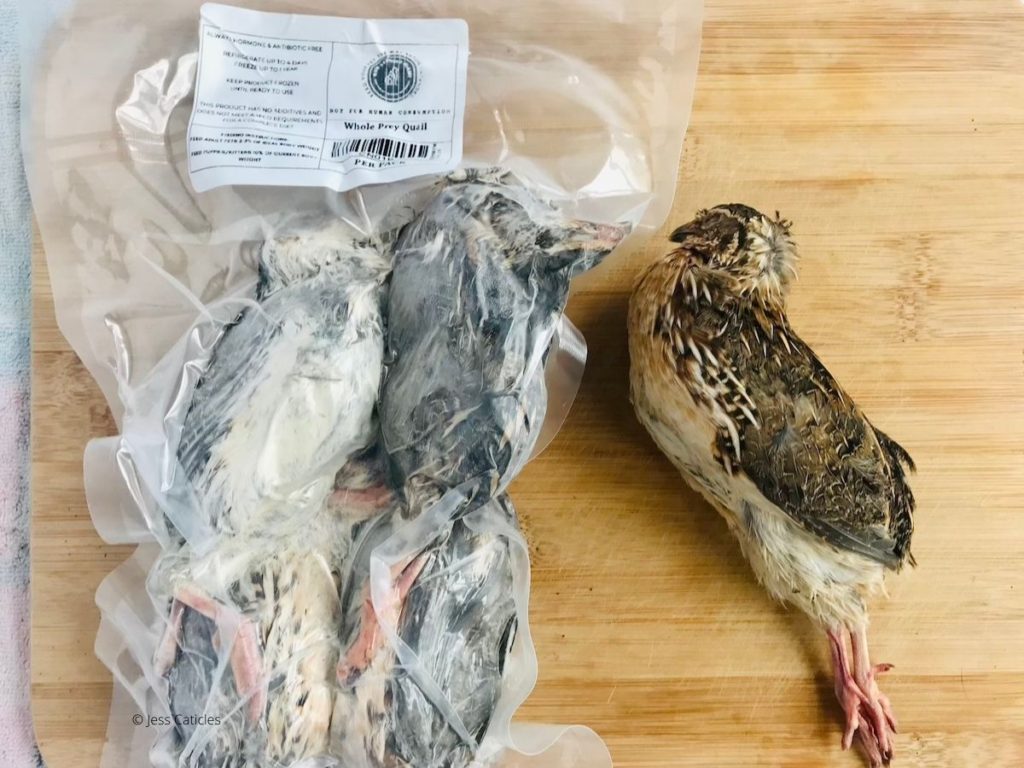
Younger quail are around the size of a day-old chick. But you will have to cut up adult quail into multiple pieces because they are too large for cats. Adult quail usually weigh around 6-9 ounces.
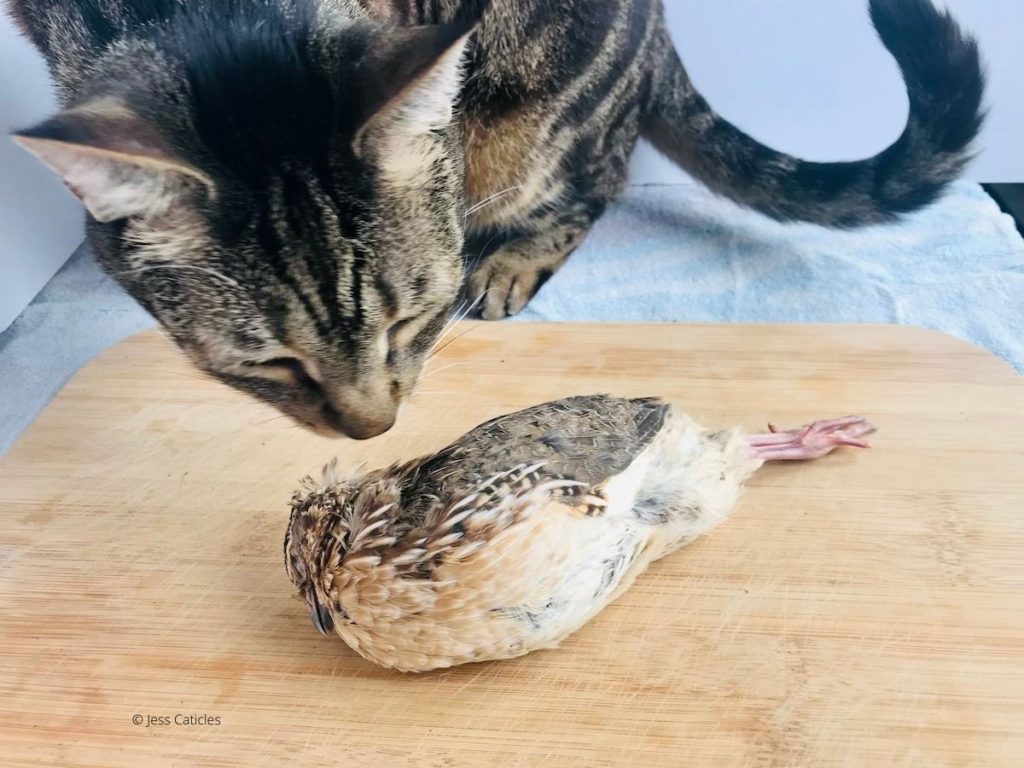
Quail is another prey that Jericho has had in his diet for a long time. Unfortunately, I think he is developing a sensitivity to them. Or I’m thinking the feathers might be an issue. It seems he needs to drink water when he eats these, has coughs, and regurgitates his food. So I’m stopping quail for now.
Pinkie rabbits
Rabbits are a natural prey for cats as well. But pinkies are the only size of whole rabbit that cats could eat without any waste. Pinkies are between 1-2 ounces total usually. Fuzzies and older are too large and have bigger bones by then. So your cat likely won’t be able to finish the entire prey.
I really want to try pinkie rabbits for Jericho, but they are always sold out. Jericho does eat ground rabbit, though.
Where to buy whole prey for cats
The most common places to buy whole prey for cats are from breeding facilities that sell to reptile owners. For some reason, it’s normal for pet snakes to eat whole prey, but it isn’t normal for pet cats. Well, I’m here to make it normal for cats to eat whole prey diets!
I have experience buying whole prey from a few different places. I’ll talk about my favorite and others that I have experience with.

Cold Blooded Cafe
I’ve purchased many different prey from Cold Blooded Cafe. Jericho has had the large and jumbo mice, pup and small rats, African soft-furred rats, hamsters, day-old chicks, and quail from them. Their stock changes quickly because they source some prey from other local farms.
Hare Today actually has a better price for DOC so I will probably order from them next time instead since I’m not feeding quail or rodents anymore.
Rodent Pro
I purchased mice from Rodent Pro a few times. But unfortunately, the quality went down. The feeders smelled like urine, and there were lots of poops in the bag. This was a few years ago so I don’t know if their quality has changed.
But one important thing to note is that Rodent Pro’s feeders are now imported from other countries and irradiated. Irradiation kills bacteria and is used to preserve foods. But unfortunately, this can make cats ill and can even be deadly. Cats in Australia ate dry food that was irradiated, and 90 of them got sick and 30 died. Apparently, irradiation kills Vitamin A, and cats cannot synthesize this on their own. It must be in the diet.
Unfortunately, a lot of other suppliers are doing the same, according to this Reddit post. So I am reaching out to other suppliers so that I have options. I would love to buy from Hare Today, but they source from Layne Labs, which import and irradiate.
Raw Feeding Miami
I’ve also purchased whole prey quail and goslings from Raw Feeding Miami in the past. But I don’t order from them anymore because I don’t need anything else that they sell. And I mainly buy Jericho’s raw food from Hare Today who also sells whole prey.
Is feeding whole prey a balanced diet?
A common belief is that whole prey is a balanced diet for cats. But we don’t know for sure if it is.
Unfortunately, we don’t have a full nutritional analysis of whole prey. So there’s no way of knowing if feeding whole prey only is actually balanced. This paper notes whole prey nutrition data that we do have.
Nutrient data we have for whole prey:
- Protein %
- Fat %
- Ash %
- Gross kcal
- Dry matter %
- Vitamin A
- Vitamin E
- Calcium
- Phosphorus
- Magnesium
- Sodium
- Potassium
- Copper
- Iron
- Zinc
- Manganese
Nutrient data we do not have for whole prey:
- All 8 B vitamins
- Vitamin D
- Vitamin K
- All 13 amino acids
- All 4 fats
- Iodine
- Selenium
- Chloride
- Choline
So there’s more nutrient data that we don’t have than what we do have. At least this data is from whole prey raised in captivity at breeding facilities.
We know cats eat whole prey in nature. However, they hunt prey based on what they need. And they cannot do that indoors. They rely on us to feed them what they need.
Also, the prey they eat in nature are not the same as the prey we buy.
Prey in nature have access to the sun, exercise, and they eat their natural diet. But prey raised on farms and breeding facilities typically don’t get a lot of exercise or sun, and they eat feed that’s basically kibble for rodents. And it’s made by the same junk food companies too.
Some prey raised in captivity eat better than others. But they are still in captivity and don’t live the same life as the ones in nature.
I get around this by feeding whole prey along with a homemade raw diet that I formulate myself. I use Paws of Prey Cat Meal Formulator which includes whole prey.
How to feed cats a whole prey diet
The best way to feed your cat a truly balanced whole prey diet is to feed it alongside a balanced raw diet (either premade or homemade).
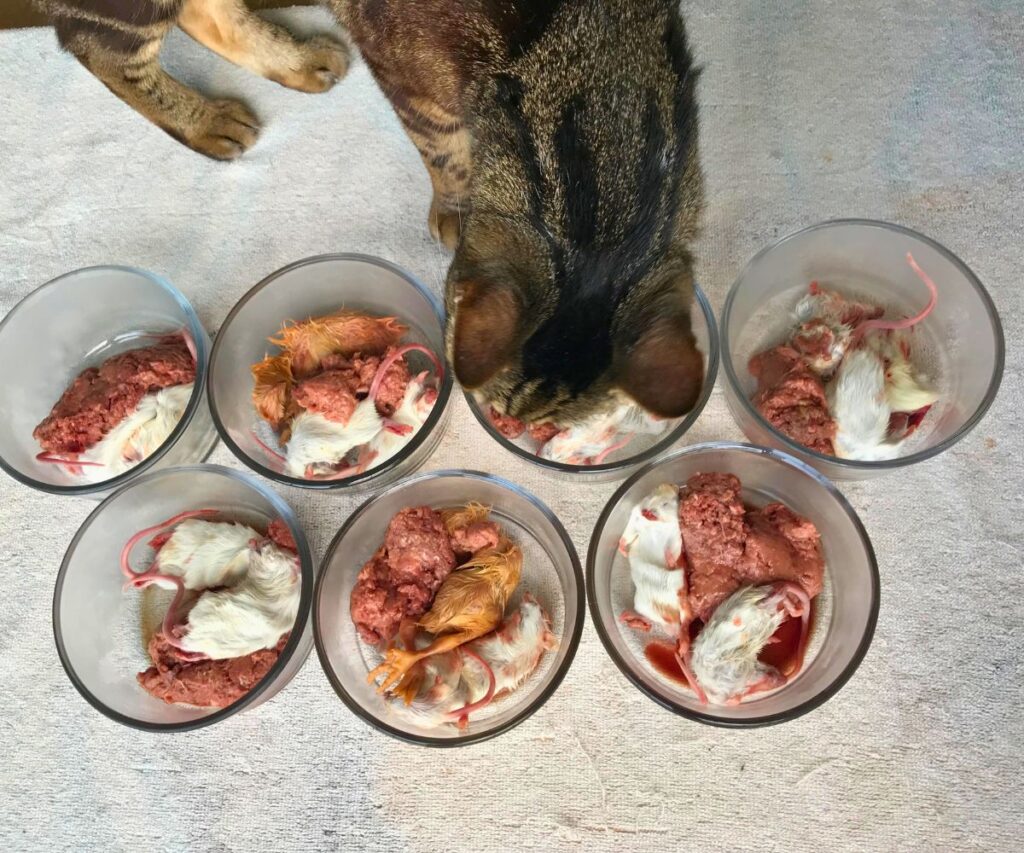
Feed whole prey that are around 1-2 ounces total in weight. Cut up prey if they are larger than that.
I highly recommend switching your cat from kibble to raw first. Your cat will probably not recognize whole prey as food at first. Jericho eats a raw diet before I gave him his first whole prey, and he batted the mouse around like it was a toy.
But introducing whole prey will still be much easier if your cat is already eating raw.

Get your cat to eat whole chunks of meat first so he understands that he has to chew his food. You will probably have to cut up the prey into smaller pieces as well. This will help your cat get see it as food, get used to chewing, and also expose some of the blood and organs which resemble raw food more.
You can also smear some of your cat’s raw food on top of the whole prey pieces so he recognizes his raw food and starts to lick and then chew on the prey. Eventually, you can offer whole prey without cutting it up. But you may still have to smear raw on top the first few times you offer it.
Check out my whole prey recipe for cats as an example of what to feed.
Or check out the pros and cons of feeding whole prey if you still need more info to decide if a whole prey diet is right for your cat.
